We may earn a commission when you buy through links on this site, at no extra cost to you. As an Amazon Associate I earn from qualifying purchases.
Comparison
Best Espresso Machines of 2026: 10 Models Ranked
We compared the specs of 10 espresso machines for 2026, from Breville semi-automatics to Jura and De'Longhi super-automatics, and ranked them by who each suits.
B By the Best Espresso Machine editorial team ·Published
At a glance
Most home baristas should start with the Breville Barista Express Impress: a built-in grinder, assisted tamping and a manual steam wand. The De'Longhi Magnifica Evo with LatteCrema makes one-touch lattes, the Ninja Luxe Café Premier (ES601) adds drip coffee and cold brew, and the Philips 3300 Series LatteGo has the easiest milk cleanup.
Buying an espresso machine in 2026 means choosing between very different ideas of what “making espresso” involves. Some machines ask you to grind, dose, tamp and steam milk yourself. Others do it all with one touch, and a few skip the beans and use capsules. We have not handled these machines. We compared the specifications each manufacturer publishes, read the sources listed at the end and ranked ten models by who each one suits. Where a maker does not publish a figure, we say “not listed.”
How We Chose
Seven questions sort the field quickly:
Machine type. A semi-automatic gives you control over dose, tamp and milk texture, and a learning curve to go with it. A super-automatic, also called bean-to-cup, grinds, brews and often froths milk at the touch of a button. A pod machine uses capsules and asks almost nothing of you.
Grinder. A built-in burr grinder means one box, one footprint and fresher coffee. Machines without a grinder need a separate burr grinder or beans ground for espresso at a shop, and fresh grounds go stale in a week or two.
Milk system. Manual steam wands make the best microfoam in practiced hands. Automatic wands and one-touch systems trade control for consistency. Anything that touches milk has to be rinsed or cleaned.
Heat-up time. Traditional boilers can need several minutes. Newer heating systems list seconds. That matters if you make one drink on a weekday morning.
Cleaning. Ask what comes apart, what goes in the dishwasher and how often the machine must be descaled.
Footprint. Check width, depth and height, including the headroom needed to fill the tank or bean hopper under a cabinet.
Safety marks. Look for UL or ETL on the label, and remember that these are heating appliances that run on a standard 120 V outlet.
We group models by range (“entry-level”, “mid-range”, “premium”) rather than by price, because prices change often. Check the current price on Amazon before you decide.
Comparison Table
#
Model
Type
Grinder
Milk system
Best for
1
Breville Barista Express Impress
Semi-automatic
Built-in conical burr, 25 settings
Manual steam wand
Learning real espresso from beans
2
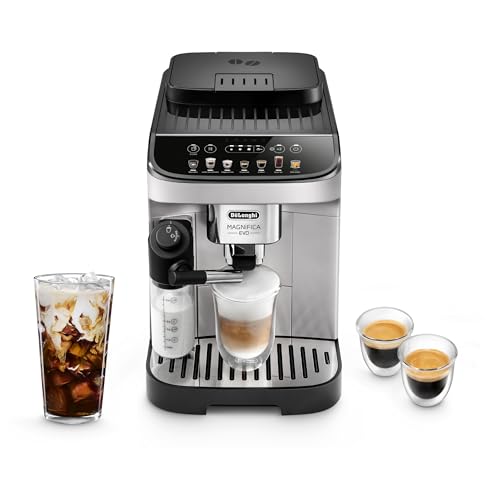
De’Longhi Magnifica Evo with LatteCrema
Super-automatic
Built-in conical burr, 13 settings
Automatic LatteCrema system
One-touch lattes
3
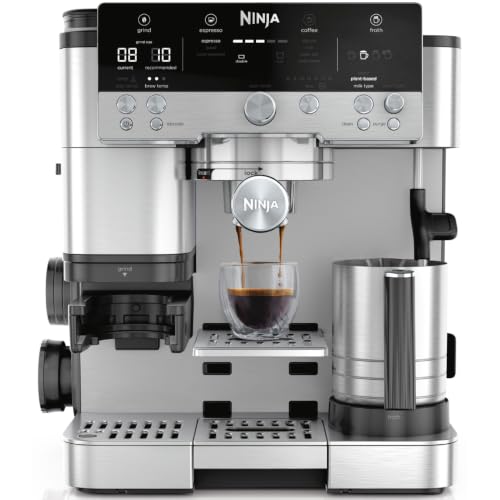
Ninja Luxe Café Premier (ES601)
Semi-automatic, 3-in-1
Built-in, with Barista Assist
Hands-free Dual Froth System
Espresso, drip and cold brew in one
4
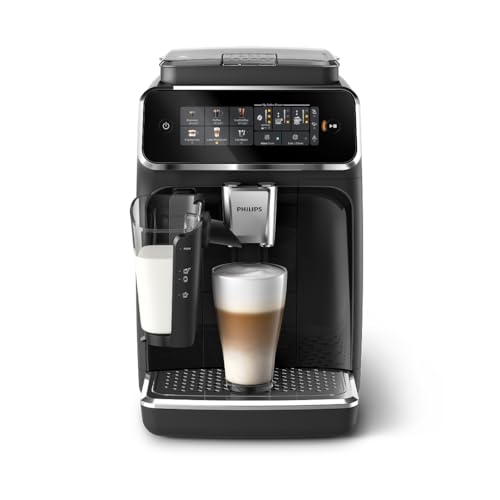
Philips 3300 Series LatteGo
Super-automatic
Built-in (details not listed)
LatteGo, no tubes
Easy milk cleanup, lower noise
5
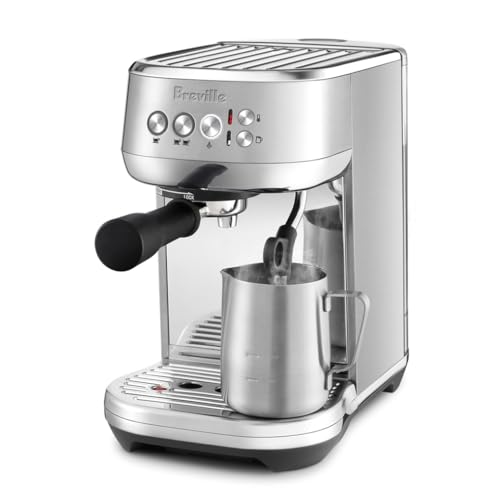
Breville Bambino Plus
Semi-automatic
None
Automatic steam wand
Small kitchens, quick heat-up
6
Breville Barista Touch Impress
Semi-automatic, touchscreen
Built-in conical burr, 30 settings
Automatic milk texturing
Guided, mostly hands-off lattes
7
Jura E8
Super-automatic
Professional Aroma Grinder
One-touch milk drinks
Busy households and small offices
8
Gaggia Classic Evo Pro
Semi-automatic
None
Manual steam wand
Hobbyists who like to tinker
9
Nespresso Vertuo Pop+ by Breville
Capsule
None needed
None on this model
Zero-effort coffee and short espresso
10
De’Longhi Stilosa
Manual, entry-level
None
Manual steam wand
A first, low-cost espresso machine
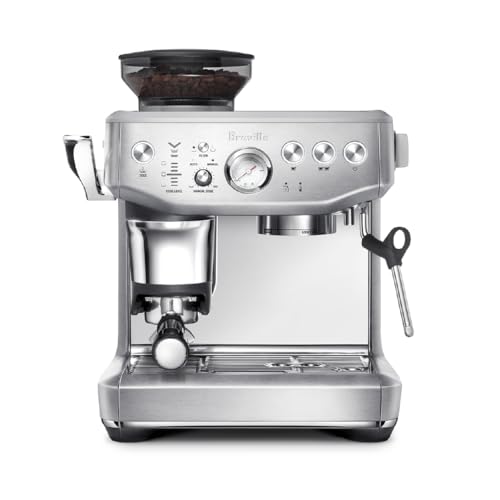
1. Breville Barista Express Impress — The Starter Machine With Training Wheels
According to Breville, the Barista Express Impress has a built-in conical burr grinder with 25 settings and the Impress Puck System, which Breville describes as assisted tamping with a constant 22 lb of force and a 7-degree finishing twist, plus intelligent dosing. Tamping is where most beginners get inconsistent, so removing that variable makes the first weeks easier. Breville also lists low-pressure pre-infusion followed by 9 bar extraction, Thermocoil heating, a 54 mm portafilter and a manual steam wand.
It ranks first because it is the one machine on this list that teaches you real espresso without leaving you to buy and match a grinder. The trade-offs are real: it is still a semi-automatic that rewards practice, and the manual wand takes a few weeks of daily use to master. Breville lists it at 16.6 inches wide, 14.4 inches deep and 12.2 inches tall, so it needs a clear stretch of counter. Breville’s page does not list weight, tank size or electrical ratings. Our Breville Barista Express Impress profile has the full breakdown.
2. De’Longhi Magnifica Evo with LatteCrema — One Button, One Latte
The Magnifica Evo ECAM29084SB is a super-automatic with a conical burr grinder that has 13 settings and the LatteCrema automatic milk system, so a cappuccino or latte comes out after one touch. According to De’Longhi, the removable parts are dishwasher-safe, and the box includes a cleaning brush, a descaler bottle and a water hardness test strip.
It takes second place because it removes almost all of the skill from the process, which is exactly what many households want. You give up control over the shot compared with a semi-automatic, and the milk system adds parts to rinse. Be careful when ordering: De’Longhi sells the Magnifica Evo in more than one configuration, and other versions use a manual frother, so match the model number ECAM29084SB. De’Longhi’s page does not list dimensions, weight, tank size or electrical ratings. See our De’Longhi Magnifica Evo profile.
3. Ninja Luxe Café Premier (ES601) — Espresso, Drip and Cold Brew in One
According to SharkNinja, the Luxe Café combines three jobs: espresso (double and quad shots), drip coffee in classic, rich and over-ice styles, and rapid cold brew, with drink sizes from 6 to 18 ounces. Its Barista Assist feature suggests a grind size based on the previous shot and uses weight-based dosing, and a Dual Froth System offers four hands-free milk presets, including cold foam. SharkNinja also describes a cold-pressed espresso mode meant for iced drinks.
It sits third because it suits mixed households, where one person wants a latte and another wants a pot-style cup. The downside is complexity: more modes and parts to learn and clean. SharkNinja’s announcement does not list dimensions, weight or wattage, so we do not quote them. Check the product page for those details, and look for a UL or ETL mark on the label. See our Ninja Luxe Café Premier profile.
4. Philips 3300 Series LatteGo — The Easiest Milk Cleanup
Philips describes the 3300 Series (EP3341/50) as a fully automatic machine with the LatteGo milk system, which has no tubes and, according to Philips, cleans in as little as 10 seconds. The AquaClean filter is rated by Philips for up to 5,000 cups without descaling when you change it as prompted, and SilentBrew carries Quiet Mark certification, with Philips claiming 40% less noise than earlier models. Philips lists 6 beverages: 5 coffee recipes plus hot water.
It ranks fourth because it is the lowest-maintenance machine with automatic milk, but the menu is leaner than some rivals and you have less control over the shot. Philips’ page does not give the grind setting count, dimensions, tank size or electrical ratings. See our Philips 3300 Series LatteGo profile.
5. Breville Bambino Plus — Small, Fast and Forgiving
Breville lists the Bambino Plus at 11.9 inches wide, 7.4 inches deep and 14.3 inches tall, roughly the width of a toaster. Its ThermoJet system is ready in about 3 seconds according to Breville, and it adds PID temperature control, low-pressure pre-infusion followed by 9 bar extraction and a 54 mm portafilter. The automatic steam wand textures milk to the temperature and texture you set.
It ranks fifth because it gives up the grinder to save space. You need freshly ground espresso-fine coffee from a shop or a separate burr grinder. If you want one box and one purchase, the Barista Express Impress above does both jobs. Breville’s page does not list weight, tank size or electrical ratings. See our Breville Bambino Plus profile.
6. Breville Barista Touch Impress — The Guided Premium Option
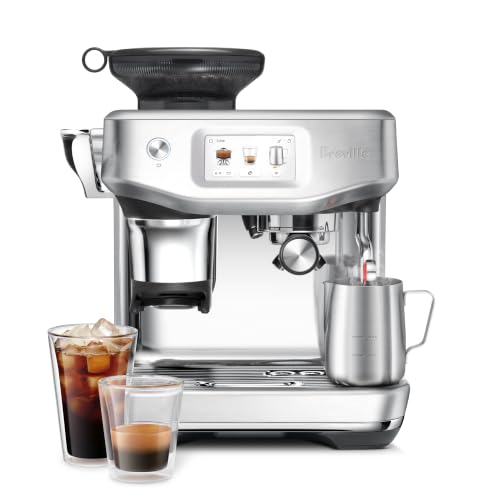
According to Breville, the Barista Touch Impress has an integrated Baratza conical burr grinder with hardened steel burrs and 30 grind settings, the Impress Puck System with 22 lb assisted tamping, ThermoJet heating that reaches extraction temperature in 3 seconds, and an automatic milk wand with adjustable temperature and texture. A touchscreen walks you through each drink, and Breville lists a Cold Extraction function for cold brew in under 3 minutes.
It lands sixth because it sits in a higher price tier and takes more room than the Barista Express Impress without changing the basic idea. Breville lists 16.3 x 13.8 x 13.3 inches (W x D x H). Breville’s page does not list tank size, weight or wattage. It makes sense for households that will use it every day and like guidance. See our Breville Barista Touch Impress profile.
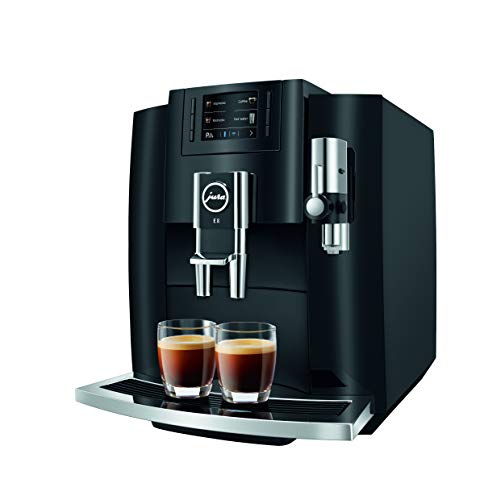
Jura lists the E8 with 17 specialties, including flat white and latte macchiato, a Professional Aroma Grinder, a 2.8 inch color display, an HP3 milk system, a 64 oz (1.9 L) water tank and a 10 oz bean container. It measures 11 x 13.8 x 17.6 inches (W x D x H), weighs 21 lb and draws 1450 W at 10 A on 120 V. It is a tall machine, so measure under your cabinets.
It ranks seventh because the premium price tier and the ongoing cost of Jura filter cartridges and cleaning tablets narrow its audience, even though the daily effort is low. A note on versions: Jura’s US site lists the E8 under separate article numbers by color, and its pages do not cover the Piano Black version itself, so check the article number on the listing against Jura’s page. See our Jura E8 profile.
8. Gaggia Classic Evo Pro — The Enthusiast’s Classic
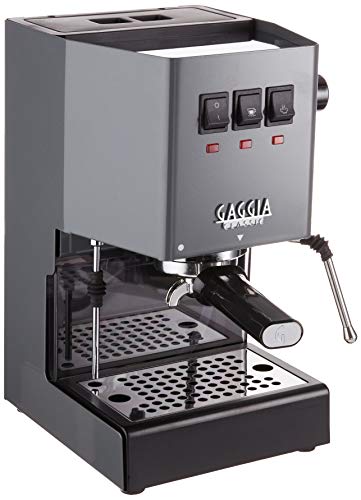
The Gaggia has three main controls and a steam and hot water knob: no screen, no presets and no grinder. Gaggia’s US manual for the RI9380 describes a professional-style filter holder, a pressurized-style filter for early use and a traditional filter to move up to. It also calls for descaling every 2 months with Gaggia’s own product, and warns that the single boiler means you wait between brewing and steaming.
It ranks eighth because the experience is demanding: you must supply a good burr grinder, practice and a regular maintenance routine. For the right person, that is the appeal. Because we did not read Gaggia’s product page, we do not quote dimensions, tank size or pressure figures. Note that the manual is titled Classic Pro, so match the model code RI9380. See our Gaggia Classic Evo Pro profile.
9. Nespresso Vertuo Pop+ by Breville — Pods, Zero Learning Curve
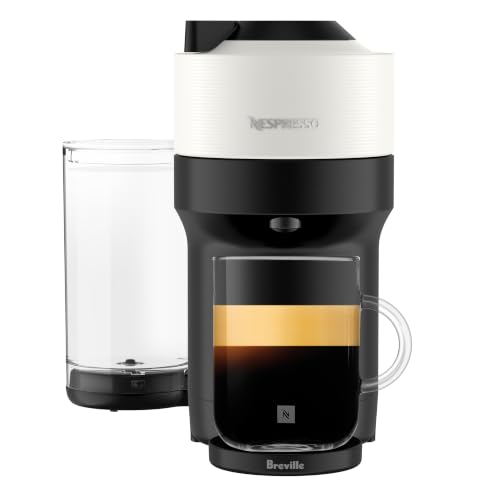
According to Nespresso’s manual, the Pop+ reads a barcode on each Vertuo capsule and sets the brew itself. It runs on 120 V at 1500 W, measures 8.6 x 14 x 10.4 inches (W x D x H), weighs 7.9 lb and has a 25.4 fl oz (750 ml) tank. Capsule sizes range from a 0.84 fl oz (25 ml) ristretto and a 1.35 fl oz (40 ml) espresso up to larger mug and carafe sizes. It heats in about 30 seconds.
It ranks ninth because pods trade control and capsule choice for convenience: it works only with Vertuo capsules, not the Original line, and this model has no milk frother, so milk drinks need an Aeroccino or another frother. For a desk, a dorm-size counter or a guest room, though, nothing on this list is simpler. See our Nespresso Vertuo Pop+ profile.
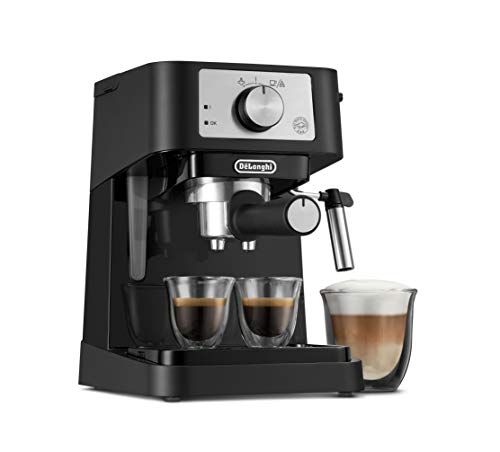
10. De’Longhi Stilosa — The Lowest-Cost Way to Learn
De’Longhi lists the Stilosa with a 33.81 oz (about 1 L) tank, 120 V and 1100 W, a weight of 8.61 lb and a two-level cup holder with a maximum cup height of 4.29 inches. The controls are simple dials with no menus. It has a manual steam wand and no grinder.
It ranks last only because the others offer more. It has no grinder, a plastic body and little room to grow. As an entry point to a portafilter and a steam wand, it is the lowest-priced route in our ranking, and it fits a small kitchen. Budget for a grinder and for practice. See our De’Longhi Stilosa profile.
A first, low-cost espresso machine: the De’Longhi Stilosa, number 10.
We group the models by range, without quoting prices. Entry-level: the De’Longhi Stilosa and the Nespresso Vertuo Pop+. Entry to mid-range: the Breville Bambino Plus. Mid-range: the De’Longhi Magnifica Evo, the Philips 3300 Series and the Gaggia Classic Evo Pro. Upper mid-range: the Breville Barista Express Impress and the Ninja Luxe Café Premier. Premium: the Breville Barista Touch Impress and the Jura E8. Remember that a machine without a grinder needs one more purchase, which narrows the gap with models that have one built in.
Conclusion
For most people who want real espresso at home, the Breville Barista Express Impress is the one to buy: it grinds, doses and tamps with help, and it teaches you the craft. If you want a latte at the touch of a button, choose the De’Longhi Magnifica Evo with LatteCrema, or the Philips 3300 Series if cleanup and noise matter most. Pick the Ninja Luxe Café Premier if your household also drinks drip coffee and cold brew, the Bambino Plus if space is the problem, and the Jura E8 for heavy daily use. Choose the Gaggia Classic Evo Pro if you want a hobby, the Nespresso Vertuo Pop+ if you want no effort, and the De’Longhi Stilosa if the budget is the main limit.
What is the best espresso machine for most people at home?
We rank the Breville Barista Express Impress first. It has a built-in grinder with 25 settings, assisted tamping and a manual steam wand, so you can start from whole beans and learn real espresso. If you would rather press one button for a latte, look at the De'Longhi Magnifica Evo with LatteCrema in second place.
What is the difference between a semi-automatic and a super-automatic espresso machine?
On a semi-automatic you dose, tamp and steam milk yourself, which gives control and a learning curve. A super-automatic grinds, doses, brews and often froths milk at the touch of a button, which is faster but gives you fewer ways to adjust the shot. Pod machines sit at the easiest end of the scale.
Do I need a separate grinder?
For the Breville Bambino Plus, Gaggia Classic Evo Pro and De'Longhi Stilosa, yes, or you can buy beans ground for espresso and use them within a week or two. The Breville Barista Express Impress, Barista Touch Impress, Magnifica Evo, Jura E8 and Ninja Luxe Café Premier include a grinder, and the Nespresso Vertuo Pop+ uses capsules, so it needs none.
Which machine is easiest to clean?
The Nespresso Vertuo Pop+ has no grinder, portafilter or milk system to wash. Among machines that make milk drinks, Philips says the LatteGo system on the 3300 Series cleans in as little as 10 seconds, and De'Longhi says the removable parts of the Magnifica Evo are dishwasher-safe.
What is the smallest espresso machine on this list?
The Breville Bambino Plus is about 11.9 inches wide, according to Breville, and the Nespresso Vertuo Pop+ measures 8.6 x 14 x 10.4 inches (W x D x H), according to its manual. The Vertuo is narrower but uses capsules and has no milk system, while the Bambino Plus steams milk but needs a grinder.
Is it safe to plug an espresso machine into a regular kitchen outlet?
Home machines in this class are designed for a standard 120 V US outlet, and Jura lists 1450 W and 10 A for the E8. Look for a UL or ETL mark on the label, avoid extension cords and think about what else shares the circuit, since a heating appliance draws a lot of current.