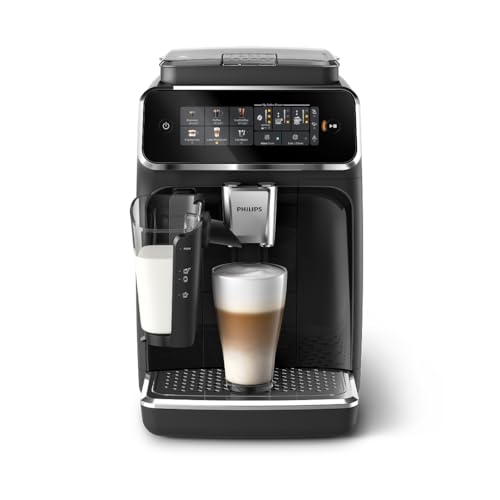
Milk is where most super-automatic machines turn into chores. Tubes get clogged, parts are fiddly and the cleaning routine takes longer than the drink. The Philips 3300 Series with LatteGo (EP3341/50) was designed around that complaint. It pairs a straightforward bean-to-cup machine with a milk system Philips says rinses clean in seconds, and it adds a water filter and a noise-reduction feature aimed at everyday households. This page goes through what Philips publishes about the machine, who it fits and where other models on this site do more. For the whole field, see our ranking of the best espresso machines of 2026.
We have not handled this machine and take no measurements of our own. What follows draws on Philips’ published product page and general knowledge of how super-automatics work. Philips’ page leaves out several details, including dimensions, tank sizes and weight, so we do not quote any.
The LatteGo Milk System
LatteGo is the reason this machine exists in the lineup. According to Philips, it is an automatic milk frothing system that can be cleaned in as little as 10 seconds. The design is a milk container that attaches to the front of the machine with no tubes running into the carton. Fewer parts and no tubing mean fewer places for milk to hide, which is where bacteria and odors tend to build up in other designs.
The practical difference shows up on a busy weekday. After a latte, you detach the container, rinse it under the tap (or put it in the dishwasher if the manual permits) and click it back. Compare that with machines that need a flush cycle plus tube cleaning after every use. If milk drinks are most of what your household makes, this is a convincing reason to shortlist the 3300.
LatteGo makes automated milk foam, not microfoam for latte art. If you want to pour hearts and rosettas, the manual steam wand on the Breville Barista Express Impress is the better tool.
Drinks and Controls
Philips lists 6 beverages: 5 coffee recipes plus hot water for tea. That is a leaner menu than some competitors, and it is worth thinking about whether you need more. The core set covers espresso, a regular coffee and milk drinks; the exact recipe names are on the Philips page. If you want a longer list and an iced-coffee preset, compare with the De’Longhi Magnifica Evo, which De’Longhi lists with 7 drinks including iced coffee.
Philips’ page mentions the built-in grinder only indirectly, through the SilentBrew description of quiet grinding, and gives no grind setting count or burr material. Check the Philips technical specifications or the manual for those details before relying on them. Super-automatics generally let you adjust grind fineness, strength and volume, but how far depends on the model.
AquaClean and Descaling
AquaClean is the other headline feature. Philips says it allows up to 5,000 cups without descaling. A footnote says this figure is based on 8 filter replacements and that actual cup counts vary. The claim only holds if you change the filter when the machine prompts you, and it depends on your water. In hard-water areas, which cover much of the US, a filter can be especially useful, though results vary.
Treat 5,000 cups as the manufacturer’s best case. A household that makes four drinks a day makes roughly 1,500 cups a year, so the claim stretches over a few years. Plan for filter replacements as a recurring cost and keep an eye on the descaling prompts. Philips’ page does not describe the descaling procedure itself.
SilentBrew
Philips says SilentBrew makes 40% less noise than earlier models and that the machine has Quiet Mark certification. Quiet Mark is an independent noise-reduction award, and Philips ties it to the quiet grinding process. A quieter machine matters in open-plan apartments, early mornings and offices. It will not be silent. Any machine that grinds beans and pumps water makes noise, so treat this as a meaningful improvement over earlier Philips models, not a guarantee of whisper-quiet operation.
Size, Power and Setup
Philips’ page does not list dimensions, weight, water tank size, bean hopper capacity or electrical ratings so confirm them before you buy, especially if the machine must fit under a cabinet. In the US, look for UL or ETL marks on the label and use a wall outlet. Leave space in front to remove the milk container, and room on the side or top for refilling the tank.
Philips lists a 2-year warranty on its US page. As with any appliance, register the machine and keep your receipt.
Daily Workflow and Cleaning
A day with this machine goes like this: add beans and water as needed, choose a drink, add milk to the LatteGo container if you want a milk drink and let the machine finish. Afterward, rinse the milk container, empty the drip tray and grounds container, and wipe the spout. Philips’ page notes that LatteGo cleans quickly, and a customer comment on the page advises emptying the overflow tray often. That is typical of super-automatics, since overflow trays fill with rinse water and need regular attention.
Weekly, run the machine’s rinse prompts and wipe the bean area. Change the AquaClean filter when prompted. These are small tasks, and they are far less work than managing a manual steam wand and portafilter.
Who Should Buy It
- Milk drinks are most of what you make and you want the easiest cleanup.
- You live in an apartment or share space and want a quieter machine.
- You live in a hard-water area and want a filter-based approach to scaling.
- You want a push-button machine without a learning curve.
- You are choosing for a small office or shared break room and want simple daily care.
Who Should Look Elsewhere
- You want more drink choices or an iced-coffee preset. The De’Longhi Magnifica Evo lists more.
- You want to control grind, dose and tamp. A semi-automatic such as the Breville Barista Express Impress is the right route.
- You want real latte art. Automatic milk systems do not do that.
- You want to brew many cups for a large group; check tank and hopper sizes first.
Bottom Line
The Philips 3300 Series LatteGo is aimed at people who like milk drinks but dislike milk cleanup. The quick-rinse system, the AquaClean filter and the quieter operation each address a common complaint about super-automatics. It does not offer the longest drink list or the deepest customization, and Philips’ page leaves out several measurements, so confirm those before buying. If easy maintenance is your top priority, it deserves a close look. See how it fits alongside the others in our best espresso machines comparison, then use the link below to check the current price and configuration on Amazon.
See price on Amazon
Sources